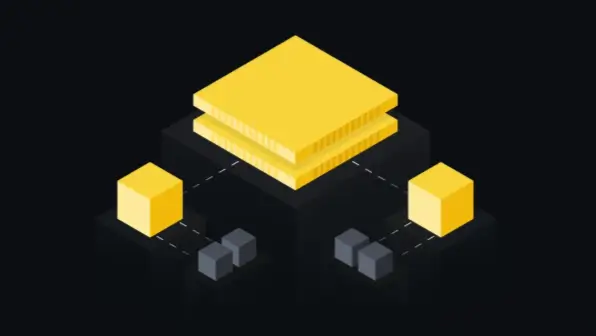

Blockchain sharding divides data and work into multiple shards, each with its own consensus. Transactions are processed in parallel, increasing throughput. Shards hold subsets of state and manage cross-shard messages to preserve coherence. Data availability and cross-chain verification enable state reconstruction, even during reconfiguration. Deterministic protocols and timely updates are essential as shards scale and re-balance. The approach offers efficiency, but its security trade-offs and real-world viability warrant closer examination.
Define Blockchain Sharding and Its Scaling Promise
Blockchain sharding is a scalability technique that partitions a blockchain’s data and workload into smaller, parallel segments called shards. It frames a framework where independent shards process transactions simultaneously, enhancing throughput. The promise centers on scaling vs. security trade-offs, seeking balanced risk management. Data availability remains a core requirement, ensuring each shard’s state can be verified and reconstructed reliably by the network.
How Data and Work Are Split Across Shards
Data and workload are divided across shards by assigning specific types of information and transactions to distinct groups that operate in parallel.
Shards specialize tasks, balancing throughput and storage.
Sharding coordination governs distribution and reallocation, ensuring equilibrium.
Cross shard messaging enables necessary coordination without centralized bottlenecks.
The approach preserves security properties while enabling scalable execution, allowing independent processing yet coherent overall consensus.
Freedom-oriented design minimizes cross-dependency friction.
See also: How AI Technology Supports Wind Energy Optimization
How Shards Coordinate and Communicate
Shards must coordinate their activities to maintain a coherent system state while operating in parallel. Coordination relies on shard consensus mechanisms that align ledgers and ensure atomicity of cross-shard operations. Cross shard messaging provides ordered communication between shards, enabling validation, notarization, and rollback safety.
The approach prioritizes determinism, timeliness, and resilience to disruption, preserving freedom through robust, predictable inter-shard collaboration.
Real-World Implementations, Security Trade-Offs, and Challenges
Real-world implementations of sharded blockchains reveal a balance between throughput gains and the security costs they incur.
Trade-offs emerge in data availability, cross shard fees, and read/write optimization.
Networks adopt rigorous cross-chain verification and shard reconfiguration to preserve safety while scaling.
Challenges include cross-shard communication latency, coordinated security models, and evolving hardware requirements, demanding disciplined governance and continuous resilience testing.
Conclusion
Blockchain sharding partitions data and workload into parallel shards, boosting throughput while preserving global consistency through cross-shard messaging and data availability. In practice, shards run independent consensus, with cross-shard verification ensuring state coherence during reconfiguration. A notable statistic: by some designs, parallel processing can multiply throughput by an order of magnitude compared to single-shard systems, though security and cross-chain verification add complexity. The conclusion emphasizes deterministic protocols, timely updates, and resilient reconfiguration as core requirements for scalable, secure shardable networks.